You must be logged in  to watch this session

Your personal data will be used to support your experience throughout this website, to manage access to your account, and for other purposes described in our privacy policy.

Sense Media, on behalf of AutoSens, needs the contact information you provide to us to update you with information about AutoSens and our products. You may unsubscribe from these communications at anytime. For information on how to unsubscribe, as well as our privacy practices and commitment to protecting your privacy, check out our privacy policy.

Improving road safety by optimizing road requirements for ADAS sensing

Event: AutoSens Europe
| Session date: Thursday 10th October
Session date: Thursday 10th October
, 2024

Hear from:

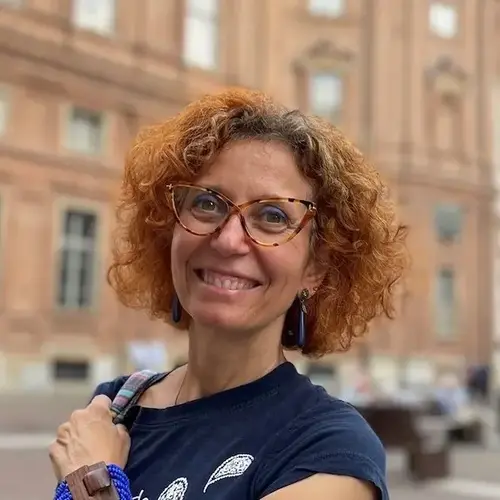
Paola Iacomussi
Paola Iacomussi
Paola Iacomussi
Applied Metrology and Engineering Department,

INRiM

Paola Iacomussi
Paola Iacomussi
Paola Iacomussi
Applied Metrology and Engineering Department,

INRiM

Lane markings are an obvious safety feature of our roads. They need to be (and are) replaced on a regular basis, some 3 to 5 years. The BELLAROMA project sees a great opportunity to improve road safety and save lives in this relatively short time-frame, by optimizing the road markings for technical sensors. Right now all definitions of road markings and colors (whites and yellows) are based on and optimized for human perception. Increasingly, this reliance on the human visual system limits the development and performance of ADAS functionality, as the consumption of the images by a computer vision algorithm has distinctly different requirements than the human visual system. The opportunity we see is to define a non-biological observer as a standard that increases visibility and contrast for technical sensors, like cameras and lidars, leveraging optimized radiometric ‚color‘ filter arrays instead of a photometric approach. A first step has been the official formation of a Research Forum of the International Commission on Illumination, the CIE (Commission Internationale de l’Eclairage), and an accompanying publication. In this talk we present the BELLAROMA project, detailing the CIE Research Forum and show first simulation results.

Passes0
There are no passes in your basket!
0