
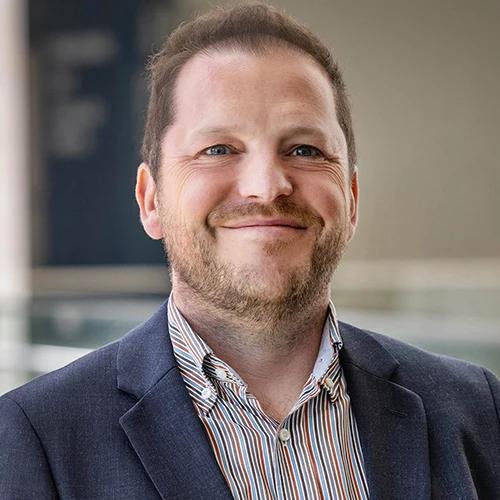
Rob Stead
Managing Director and Founder
Sense Media

Bringing together a record number of OEMs, Tier 1s, and technology innovators, AutoSens Europe 2025 in Barcelona delivered a week packed with ideas, collaboration, and inspiration. In this post, Rob reflects on the highlights and shares his biggest takeaways from the event…
This event marked two key milestones – the 10th edition of AutoSens Europe. 2025 is also the 10th birthday of Sense Media, the founder of both the AutoSens and InCabin expert communities. In that decade, we’ve had over 10,000 people through the doors of our events, and over 1200 exhibitors.
So, 2025 is a milestone year for us, and last week’s events in Barcelona didn’t disappoint in recognising this. I often say that our events are like a family reunion, and it felt just that way this year as Martin Punke of Aumovio kicked off proceedings in the opening plenary. Martin was one of the people who helped me get AutoSens up and running back in 2016, so it was wholly appropriate that he was the one to take the audience through the journey that ADAS technology has been on over the last decade, while highlighting that there are still many challenges to be faced as we continue our quest for high levels of autonomy and ever-increased safety.
With my amazing team taking care of all the details, I was able to spend a large amount of time in sessions this year, and I’ve picked out a few highlights for you. To be honest, it was hard to choose sessions most of the time, as there were so many quality presentations going on in parallel.
Tutorials Day is a huge learning opportunity...
If you don’t usually attend this day, you should. Again, it was hard to choose, but both sessions I joined were genuinely cutting-edge technical sessions, with global level experts talking about the future direction of technology development and quality evaluation. It’s an amazing opportunity to be a part of that discussion.
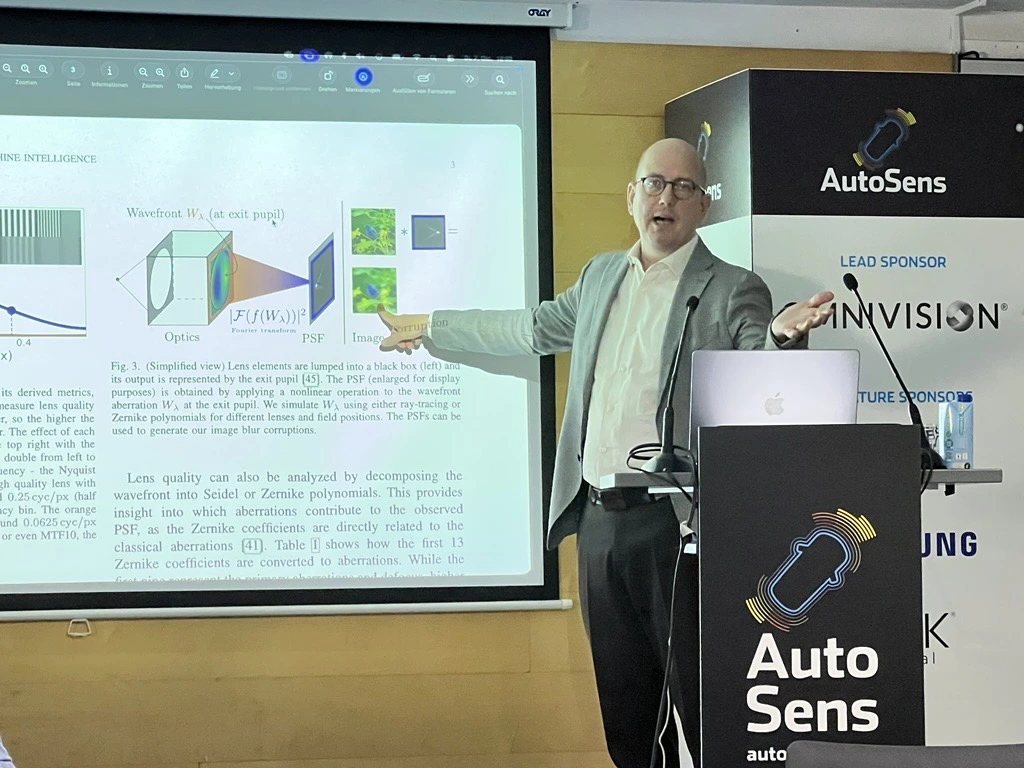
First was the windscreen metrics session hosted by Prof Alexander Braun of TU Dusseldorf, and after an introductory presentation there was a deep dive discussion about how MTF may not be the suitable metric for image quality it has been positioned as for so many years. The second session was Prof Albert Theuwissen’s run through of pixel technologies. A deeper dive into the heart of image sensors than many engineers may be used to, but the session covered the foundations right up to the latest innovations in pixel design, what this means for future image sensor capabilities, and nobody knows more about image sensors than Albert.
Consumer Acceptance needs to be the highest priority
There is literally no point of designing good ADAS and in-cabin systems if the user doesn’t like them and has the option to turn them off. It’s as simple as that, and our HMI and UX sessions at InCabin have been highlighting the shortcomings in feature design and user engagement for the last few years.
I was encouraged to see a new perspective presented by Guillermo Pascual, Head of Quality Complete Vehicle at Seat / Cupra, who has reset the baseline in terms of gathering feedback from consumers and proactively feeding this into the engineering and design teams.
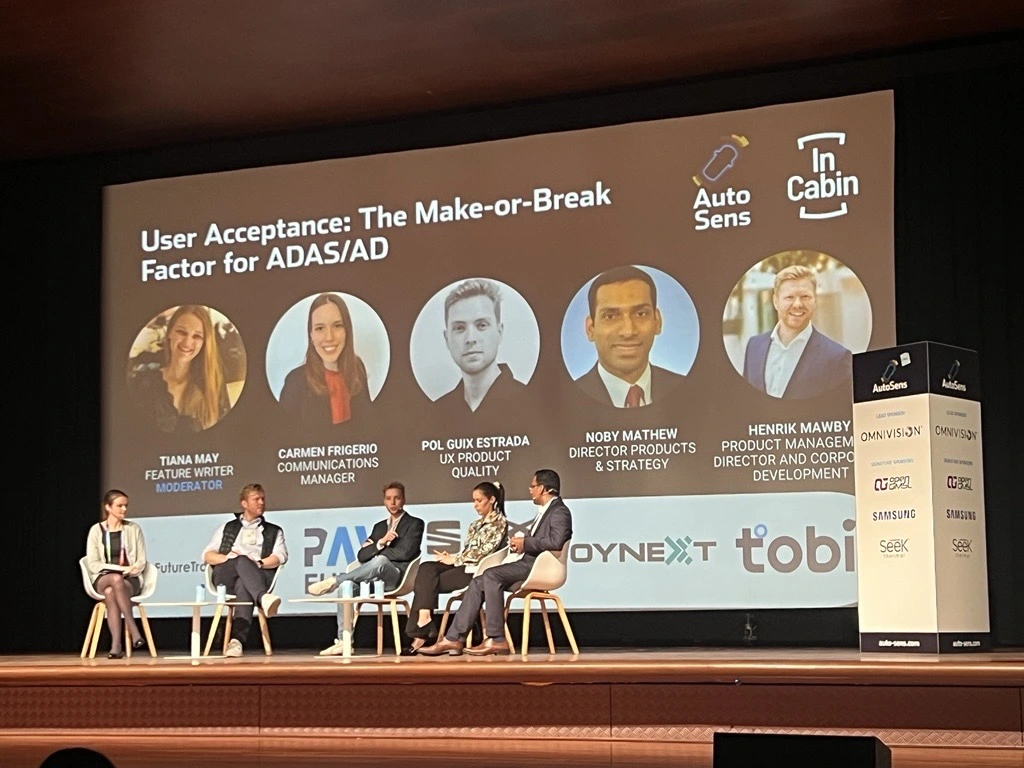
Cars these days are so much more complex to understand and the lack of consistency on UX and large differentiation between brands can make it challenging for consumers. Our closing panel discussion with Seat, Tobii, JOYNEXT and PAVE, and moderated by Tiana May of Future Transport News reinforced these points, looking at both autonomous vehicles and ADAS – we all have a role to play in educating consumers.
Remember, most people don’t buy cars brand new, so we can’t rely on dealer-based or OEM initiatives only. This education has to be baked into the car’s UX, and as my upcoming blog will show, even the best new cars can be confusing.
The Absence of Unreasonable Risk
My third highlight was another panel discussion featuring Waymo, Volvo, Valeo and Prof Braun from TU Dusseldorf. The theme was “When ISO 26262 Isn’t Enough – FuSa Challenges in AI and Perception” and debate swung back and forth between the market demands i.e. that machines have to be perfect to be accepted and the realism that perfection is not possible. Whatever the perspective, there was a lot of respect in the room for Waymo’s approach, and my key takeaway was the phrase “The Absence of Unreasonable Risk”, and you can read more about their approach here.
My personal view is that ‘Vision Zero’ has set an unreasonable precedent, and made things harder for the whole industry. While those in the know accept that it’s impossible to realise a future where there are literally zero road fatalities, it’s a concept that has been latched onto in the public mind and created unreasonable expectations. Yes, we have to take all measures we can to make testing, commercialisation and long term use of products as safe as possible. But we cannot control all factors out there in the real world, and there will be accidents. Just like there are plane crashes every year despite the public acceptance that the systems and processes in place are set up to protect us as best they can. Cars on the road operate in a much less controlled environment, and we have to accept that we cannot remove ALL risk.
We need to continue to collaborate on safety protocol, standardisation and to support initiatives like PAVE that help to educate consumers and the broader public that the benefits outweigh the risks.
There were SO MANY other interesting sessions and discussions that I don’t have time to mention here. I’ll be spending plenty of time to review the sessions I missed on the PLUS platform when they are released soon. If you attended in Barcelona, don’t forget to access the online content, and for those who missed the event you can get access online, on demand.
I seem to say it every time, but this really was the best ever event. It’s not just my own view, but we had some really nice reviews from leading analysts like Colin Barnden and Junko Yoshida.
Looking Ahead
That’s a wrap, but we are already working on the next edition – and in the meantime don’t miss our China event, taking place in Hefei, near Shanghai from 18-20 November. And if you’re not able to join us there, we’ll also be back in Detroit for AutoSens USA 2026 next June!
Interested in in-cabin monitoring technology?
With a pass to AutoSens Europe, you’ll also get full access to our co-located sister event, InCabin. See the Agenda for InCabin Europe here >>