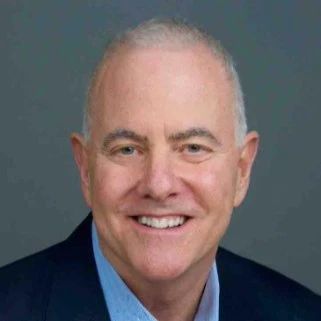
Industry experts in ADAS, automotive perception and sensing technologies, will take to the AutoSens USA 2026 stage again this June to deliver technical presentations.
Whether you want to learn more about Emerging Technologies, Image Sensors, Virtual Testing Environments, AI, Safety, Lenses, Security, or other crucial industry topics, our technical agenda covers it all!
In this round-up, gain insights into the sessions that will be delivered by Queen Mary University of London, Hoellisch Consulting, Stellantis, Bosch, NXP, Analog Devices, Woodside Capital, Kodiak, General Motors, MHP (Porsche), Torc Robotics, Ford, Synopsys and YOLE Group.
Tutorial:
Using Sensors for ODD Awareness and Anticipation
Tuesday 9th June | 1:30pm EDT | Room 140A/B
Prof. Valentina Donzella, Professor, Sensors and Perception for Intelligent System

AutoSens Keynote:
What are the hot areas for Investments and M&A in Automotive Perception
Wednesday 10th June | 12:50pm EDT | AutoSens Exhibition Stage
As the automotive industry transitions toward software-defined vehicles and higher-level autonomy, the investment landscape for perception technology is shifting from basic sensing to solving complex edge cases.
This session explores high-conviction M&A drivers and investment themes, moving beyond traditional hardware debates to analyze the next frontiers of value creation: imaging radar, thermal sensing for all-weather reliability, and AI-driven software layers.
Anatomy of a Perception Focused Camera Pipeline
Wednesday 10th June | 2:45pm EDT | AS Exhibition Stage
Dhruv Lamba
Staff Sensor Hardware Engineer

ADAS in the Physical AI Era: Architecture Shifts and Supply-Chain Power Moves
Thursday 11th June | 11:25am EDT | AS Exhibition Stage
Pierrick Boulay
Principal Analyst

AutoSens Keynote Panel: Architecture Shifts: Collapsing ECUs for Scalable Sensing & Compute
Wednesday 10th June | 12:05pm EDT | AutoSens Exhibition Stage
MODERATOR
Juergen Hoellisch
CEO

Daniel Cashen
Chief Engineer

Auston Payyappilly
Director of Product Management & Acquisitions – ADAS & Cockpit Domain Computers

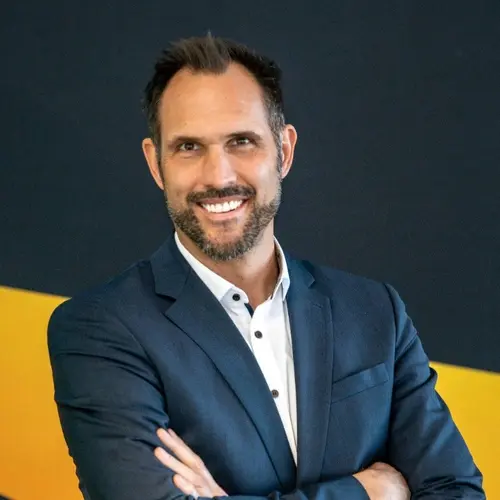
Georg Olma
Sr. Director Automotive Solutions

Geir Ostrem
Managing Director, Automotive Systems and Technology

As vehicle intelligence scales, traditional ECU-centric architectures are being stretched to their limits. Growing sensor counts, higher data rates, and increasingly complex perception stacks are driving a fundamental shift toward more centralized and zonal architectures—where sensing, compute, and control are consolidated to reduce latency, cost, and system complexity.
Lenses for the Future!
Wednesday 10th June | 5:05pm EDT | Room 140A/B
Bhagyashri Katti
Senior Researcher – AI & ML

![]()
Nithya Somanath
Senior Researcher
![]()
10BASE-T1S has emerged as the dominant technology to replace traditional multidrop networks paving the way towards IP-based converged in-vehicle communication.
In a 10BASE-T1S system, nodes transmit in a cyclic pattern where each node transmits once per cycle and must wait for its opportunity to come in the next cycle resulting in higher latency. With increasing centralization in software defined vehicle (SDV) architectures, end to end latency becomes even more pronounced, making 10BASE-T1S performance a concern for low latency control applications.
A common mitigation strategy is to limit the number of nodes on each segment, but this increases the number of 10BASE-T1S links, wiring cost and complexity. To address this challenge, we applied a set of latency optimization methods and demonstrated improvements in latency using a simulator.
High fidelity Camera Simulation to De-Risk AEB Under Difficult Lighting
Thursday 11th June | 11:00am EDT | Room 140C/D
Claudia Zaragoza -Martinez
Image Research Engineer

![]()
Lionel Bennes
Lead Product Manager
![]()
Upcoming AEB regulations—mandating deployment on all new U.S. light duty vehicles by September 2029—are redefining performance expectations for front camera sensing.
Public safety demands increasingly focus on edge cases such as night time pedestrian detection with low beam headlights, low sun and headlight glare scenarios, and low contrast targets in complex lighting.
These conditions are difficult to reproduce on proving grounds and too rare in public road testing to provide adequate statistical coverage, shifting AEB development challenges from control logic to perception robustness under optical and photometric stress.
OEM Panel Discussion: Validating AI at Scale
Wednesday 11th June | 5:20pm EDT | AutoSens Exhibition Stage
Augustin Friedel
Associated Partner

Dave Tokic
VP of Corporate Development

![]()
Venkat Adusumalli
Software Engineering Manager
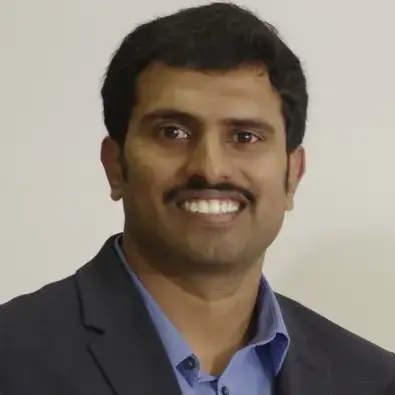
Praneeth Nelapati
Tech Specialist ADAS/AV Sensors

![]()
The automotive industry is not immune to the AI revolution, and as AI becomes central to perception and decision-making, validating its performance at scale remains one of the most complex challenges facing OEMs. Traditional validation methods struggle to keep pace with the non-deterministic nature of AI systems, the long tail of edge cases, and the sheer volume of scenarios required to build confidence in real-world deployment.
Evolving Functional Safety for Centralized and Software-Defined Vehicle Architectures
Thursday 11th June | 11:25am EDT | Room 140A/B
Ramachandra Vannala
Sr. Staff Functional Safety Engineer

Modern vehicles are rapidly transitioning toward centralized and software-defined architectures, enabled by high-performance computing and continuous software updates. While these advances unlock new capabilities, they also introduce fundamental safety challenges, as traditional Functional Safety (FuSa) practices were originally developed for static, hardware-centric systems.
Interested in in-cabin monitoring technology?
With a pass to AutoSens USA, you’ll also get full access to our co-located sister event, InCabin. Take a look at the full agenda for InCabin here >>