
We’re excited to welcome Alejandro Morate, Director of Autonomous Drive and ADAS Strategy at Zeekr Technology Europe, to the stage at AutoSens Europe.
In his session, Alejandro will explore the evolution of Advanced Driver Assistance Systems (ADAS) as OEMs push beyond Level 2 toward higher levels of automation. He’ll examine the technical and human challenges in developing Level 2+ systems, from navigating real-world edge cases to defining operational boundaries and ensuring seamless driver engagement.
Wednesday 8th October | 14:40pm | Room 8

Alejandro Morate
Director – Autonomous Drive and ADAS Strategy

Ahead of this, be sure to check out our exclusive interview with Alejandro below…
1) What are the key challenges in developing Level 2+ driving assistance systems for OEMs, and what is Zeekr doing differently?
There are many challenges:
One of the major ones right now is adapting our systems and features to the new UN Regulation No. 171, concerning Driver Control Assistance Systems (DCAS). This new regulation, on one hand, sets the rules and framework to develop and homologate L2+ systems, which is very helpful. On the other hand, it is a new regulation that requires time and effort from the OEM side to adapt to.
Another important challenge is developing a bulletproof safe system that balances as much driving automation as possible while relying on a driver who is ultimately responsible (according to SAE L2). At the same time, it must consider the limitations in reaction time and capability of an average driver who may not be paying much attention because these L2+ functions rarely require active supervision. OEMs must develop safety cases that account for the fact that when there is no ADAS, the driver is fully engaged and attentive, whereas with more automation, driver engagement drops significantly, reducing their attention to the driving task and continuous environment perception.
2) In your view, how do current and upcoming EU regulations, such as DCAS requirements, shape the design and validation of Level 2+ systems?
As explained before, DCAS is a great help for OEMs because it ensures we all understand the rules, expectations, and processes required to design, validate, and homologate our L2+ systems. In the past, this was an open area where many of us felt uneasy about releasing L2+ functions due to the lack of the possibility of having them approved by a homologation authority.
The main risk we all saw was:
- What could be the consequences of a potential incident if the functions are not reviewed and approved by a third party?
At this moment, we’re working full speed on our design and validation plans for the upcoming L2+ functions supported by our future vehicles and platforms.
DCAS includes requirements such as the implementation of a “safe stop” which, in my opinion, is great news for the overall safety of EU roads.
On the validation side, we see a clear trend moving from traditional V&V approaches based on individual functions and strict requirements toward a more comprehensive assessment involving test tracks, virtual testing, and real-world testing, always using a scenario-based approach. DCAS also brings a new focus on “in-service monitoring” to ensure that rare corner cases are addressed even after the functions are deployed to customers.
3) How is Zeekr navigating the evolving landscape of EU regulations, and how is AI being applied within Zeekr’s ADAS development to handle complex real-world scenarios?
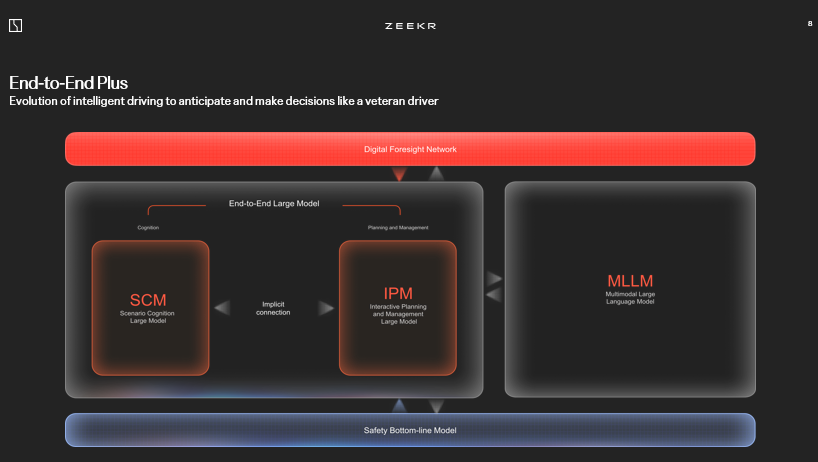
Zeekr’s ADAS development, as presented at CES 2025, is progressing rapidly using AI end-to-end technology to deliver an intelligent driving experience to our customers as soon as possible.
In the Chinese market, our Zeekr vehicles are already equipped with highway NZP (Navigation Zeekr Pilot) and urban NZP (unmapped), which provides a more human-like driving automation experience available on any road.
4) Where do you see the greatest opportunities for collaboration between OEMs, regulators, and suppliers in advancing Level 2+ ADAS technologies?
Personally, I don’t see a clear area for collaboration between OEMs in the short term, as there is intense competition to be first to market with this technology.
However, we do see a lot of partnerships and cooperation between OEMs and suppliers, such as the recently announced collaboration between VW, Mobileye, and Valeo.
When we talk about L2+ functions, there are many components that must work together: the vehicle platform, cameras, lidars, the ADAS software stack, and a high-power computing chip. This is a complex puzzle that requires many pieces, and it’s in this space that we are already seeing partnerships and collaborations, with more expected to come.
Regarding regulators, we are working together with them to create DCAS (UN Regulation No. 171), ALKS (UN Regulation No. 157), and to improve Euro NCAP Assisted Driving protocols by including more meaningful scenarios that provide useful information to drivers and healthy motivation for OEMs to push technology development.
5. Why do you think forums like AutoSens are important for the automotive community to attend, and what do you hope attendees take away from your presentation?
Forums like AutoSens are very useful to ensure a good flow of information between professionals, unimpeded by corporate policies or strategic concerns. While it may be difficult to establish cooperation agreements between large companies, it is quite easy, straightforward, and beneficial for individual engineers to share important information, discoveries, research data, best practices, and tips across the wider automotive industry.
It is also a magnificent tool for networking — something I have always personally benefited greatly from.
Interested in in-cabin monitoring technology?
With a pass to AutoSens Europe, you’ll also get full access to our co-located sister event, InCabin. See the Agenda for InCabin Europe here >>