

Written by:
Greg Brannon
AAA’s Director of Automotive Engineering Research
Advanced Driver Assistance Systems (ADAS) have great potential for saving lives and reducing crashes, so AAA began investing in their testing and research over a decade ago.
As one of the world’s largest membership organizations focused on vehicle safety, it was critical to understand these systems as they developed. Our goal with this research has been to understand the benefits and limitations of the system, as well as any misalignment between test procedures and the real world.
Our earliest automatic emergency braking (AEB) system tests showed significant weaknesses and variability among the systems, troubling when coupled with the belief by over 60% of Americans that AEB worked regardless of speed and conditions.
As a result of our survey work, we began to understand the perception of ADAS and found a significant gap between consumer beliefs and the reality of the technology’s current state. We wanted to understand what was behind this gap. We began to investigate why consumers might be confused, and our research uncovered the startling fact that naming these systems is at the root of the issue.
In 2018, automakers used over 40 different names to describe automatic emergency braking! Add this to advertising that exaggerates the capabilities, and there is a recipe for consumer confusion that is not easy to solve.
Through collaboration with Consumer Reports, JD Power, National Safety Council, and a standard-making process with SAE, we have successfully established a common naming that the industry began to utilize for in-system descriptions.
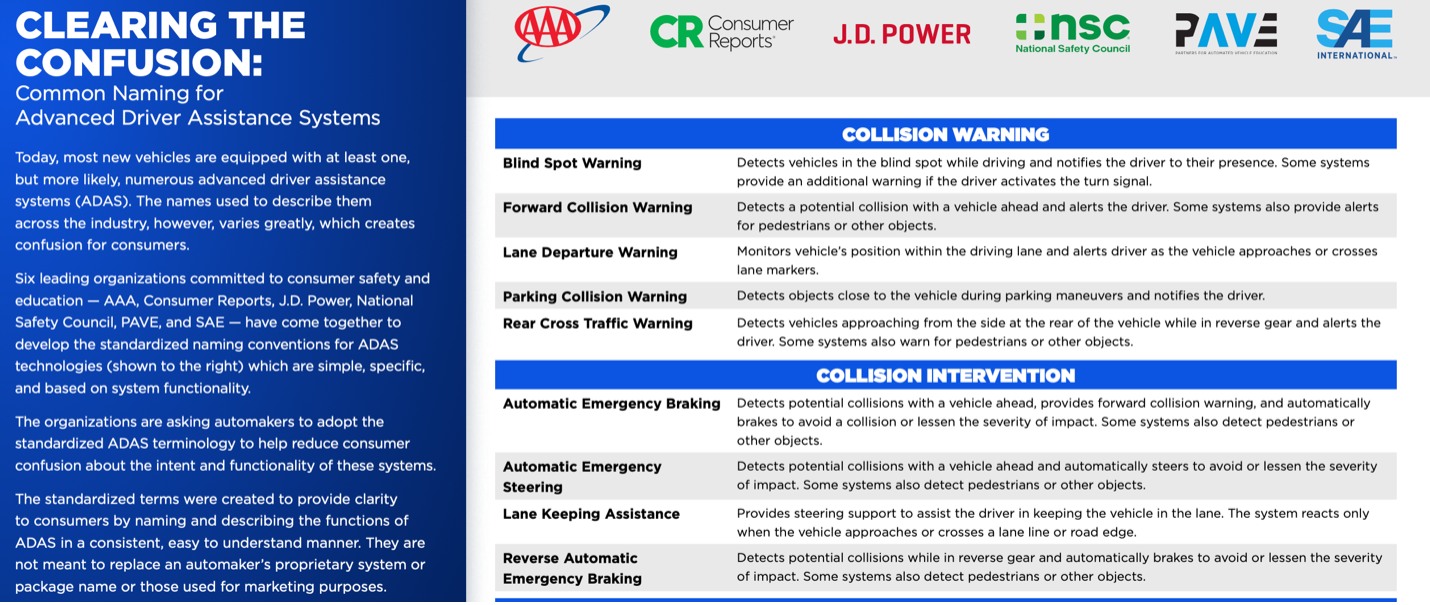
The National Highway Traffic Safety Administration (NHTSA) is also adopting some terminology in its latest standards. The industry needs to focus more on highlighting the real capabilities of these systems through effective naming and advertising, which will significantly improve consumer understanding of them.
AAA has tested nearly every type of ADAS system and examined its performance in various scenarios. We aim to identify where the systems do well and where the systems can perform better to achieve the maximum safety benefit.
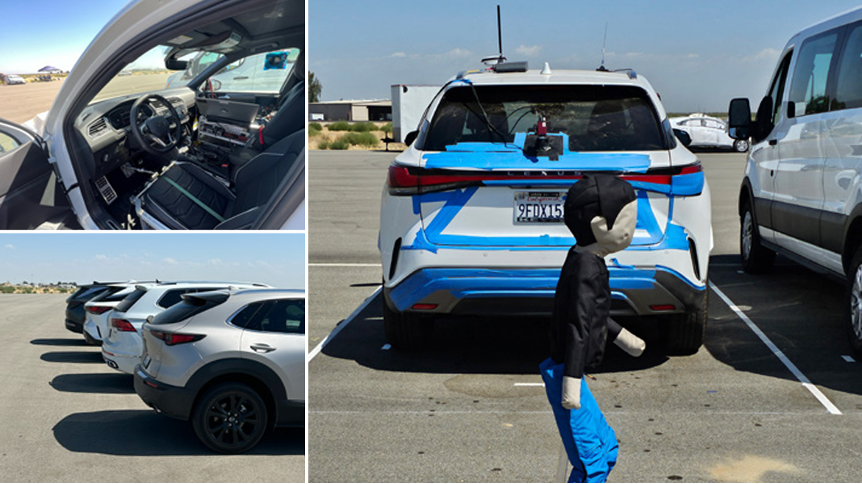
In some of our early work on pedestrian detection systems, we found they were ineffective at night. A concerning result since the AAA Foundation for Traffic Safety uncovered in early 2025 that pedestrian fatalities have increased by more than 80% in the United States in the past 15 years. Interestingly, almost the entire increase in those deaths has occurred at nighttime.
We took these findings and used them to persuade NHTSA to include nighttime testing in the new FMVSS 127. While implementing that standard is on hold, AAA believes that focusing on the situations where the systems can have the most impact will save lives in the years ahead.
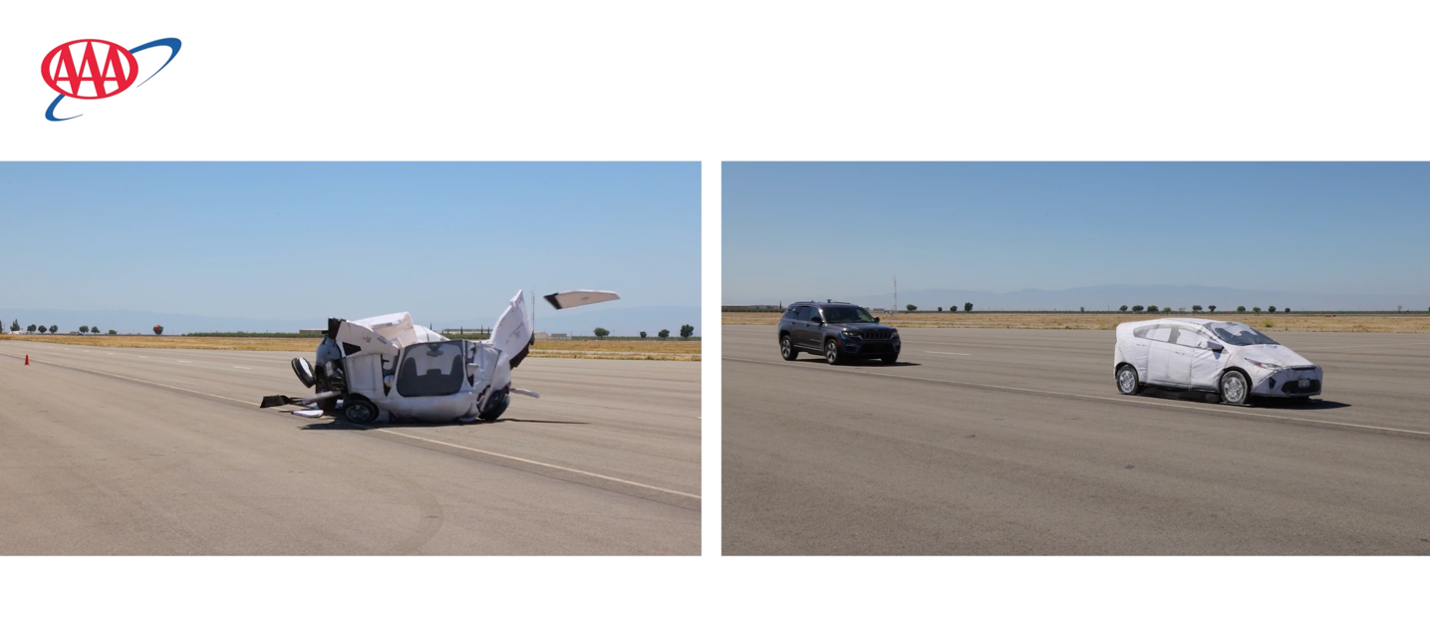
We have also seen significant progress in the effectiveness of Automatic Emergency Braking systems. A recent AAA study found that new systems avoided a collision in daylight conditions at 35 mph 100% of the time, compared to 2018 systems that only avoided it half the time. That improvement cannot be understated and will undoubtedly save lives and reduce road crashes over the coming years.
While significant progress is happening, more work must be done to ensure drivers understand the system’s limitations and their responsibility to stay engaged. As the systems improve, there is a danger that drivers will become increasingly comfortable with engaging in other tasks, such as picking up their phone. This phenomenon, termed risk homeostasis, can and will minimize the impact of all the engineering and development that has gone into these safety systems. As we continue toward further vehicle automation, drivers must understand their role.
ADAS design must reduce the chances that a driver can misuse the technology. It will require automakers, safety organizations such as AAA, IIHS, and Consumer Reports, as well as regulators at NHTSA and drivers themselves to fully realize the life-saving potential of ADAS. As of now, consumers cannot purchase a self-driving car, so clear naming, design, and implementation clarity are paramount.
This article is part of the ADAS Guide. Download your FREE copy of the guide here.
Explore more on the AutoSens YouTube Channel⬇